
Minimalism (mɪnəməlɪzəm) refers to a style of music that emphasizes economy of sounds. Minimalist music generally does not follow the typical organization of songs and pieces into verse, chorus and bridge sections but instead flows through various harmonic patterns throughout a song and is often repetitive. This style of music can also have more periods […]
Modern Composition (mádərn kàmpəzɪ́šən) refers to contemporary music composed for orchestra or for strings, brass or piano. These types of compositions are often played in churches, halls and other large spaces that help the musicians to create a resonant sound. The style is contemporary fused with classical, and it may overlap genres and fit into […]
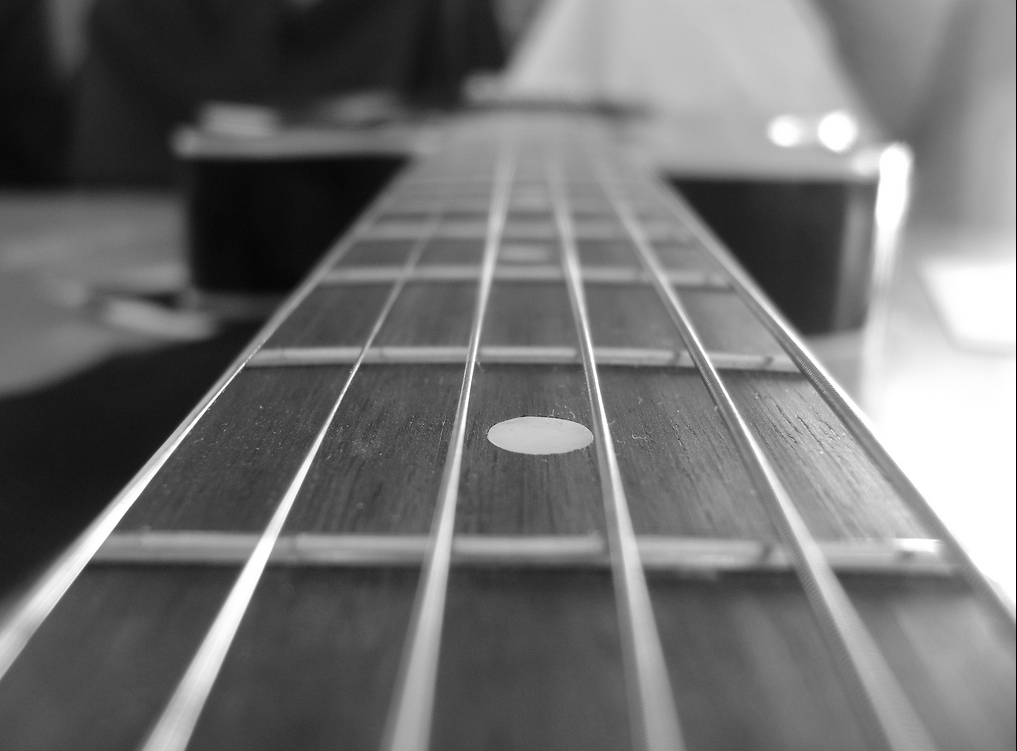
The Neck (n??k) of a guitar is the piece of wood that extends from the guitar body and ends with the headstock. Most necks have small dots on the fretboard to signify the fret number. On custom guitars the fret markers will often be pictures or different shapes depending on the theme. Some necks are bolted on to the main body of the guitar, while others are part of the body itself. The neck is where the frets and fretboard are glued to the guitar. Attached to the headstock are the tuning machines and truss rod. The frets are the small ridges down the neck against which the strings are pushed to form notes.
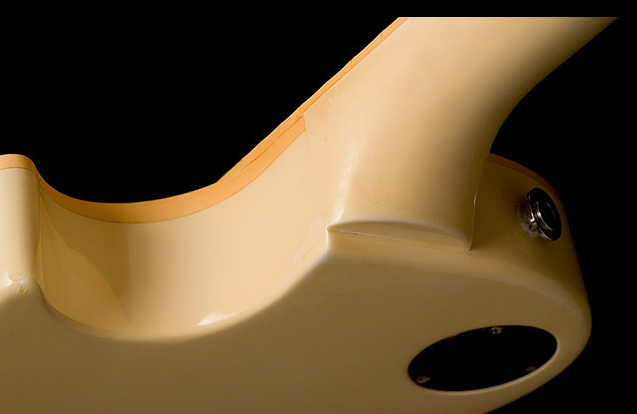
The Neck Joint (n??k ???ynt) is where the neck is either bolted or glued onto the body of the guitar. There are several different types of neck joints that are used in the construction of guitars. The Spanish Heel type of neck joint is a headblock and neck that is carved from a single piece of wood. Mortise and Tenon neck joints are types that have a peg on the end of the neck that is fastened into a cavity on the body. Dovetail neck joints use a triangular shaped peg that is inserted into a recess of the same shape. Bolt On neck joints are just what the name implies, the neck is held onto the body by a bolt.
Also, not all guitars have a neck joint. Some guitars are constructed from a single, solid piece of wood where the neck and body do not need to be joined by other means.
New Wave (nú wév) is a style of music that began to rise in popularity in the late 70s. It rose to its highest popularity in the eighties, when the style became a theme for a generation of music lovers. Once considered punk, the style eventually gained its own identity. This style of music relies […]
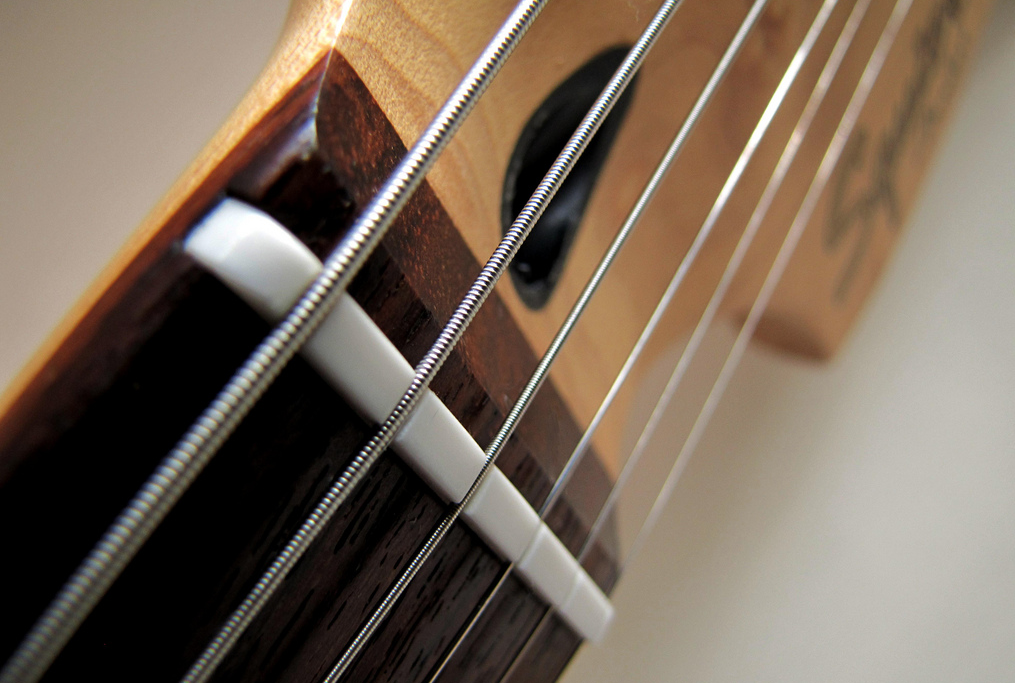
The Nut (n??t) is the area at the joint of a guitar between the headstock and fretboard that holds the strings firmly in place. The nut, which come as either standard or locking, can be made from a variety of materials, such as bone, brass, graphite, nylon, and/or plastic. Standard nuts are preferred if attempting a more traditional guitar sound, while locking nuts, which hold the strings firmly in place, are usually used with rock-style guitars. Since the tension of the strings is dependent upon the nut, the tone that a guitar produces can be adversely affected if a nut is not properly cut and placed.
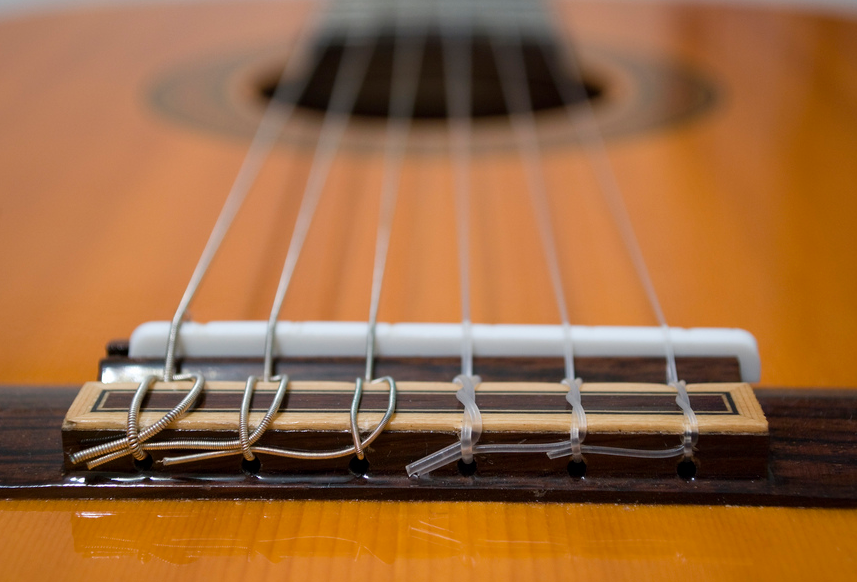
Nylon Strings (n
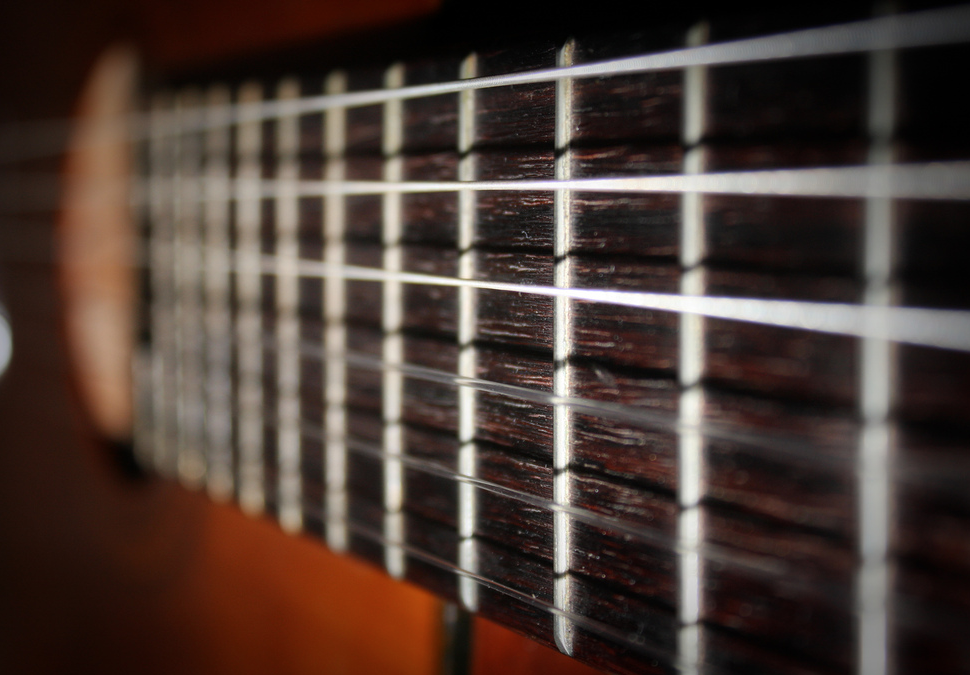
The term Open String (
Opera (Ah-puh-rah) is both a genre of music and a form all its own, combining bold music and theater and devoted to storytelling of a grand nature. Spectacular and bold melodramatic plots and characters are a vital component of the operatic form. The intent in opera music is to tell a story in a big […]
Watch short & sweet videos (5-10 minutes) that will actually teach you something useful.
Learn from masters level musicians with a minimum of 15 years full-time teaching experience.
Get anytime access to guitar instruction your computer, tablet & mobile device!
Master basic guitar fundamentals, chords, scales & your favorite styles of music or song.
We do everything we can to make our members Happy! That includes our 30 day, no-questions-asked, money-back guarantee.
Be heard. We love questions & lesson requests. New articles & videos publish constantly.


