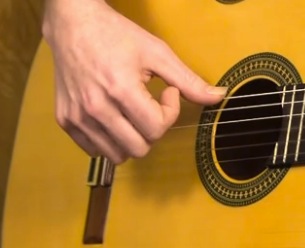
A Free Stroke (fr
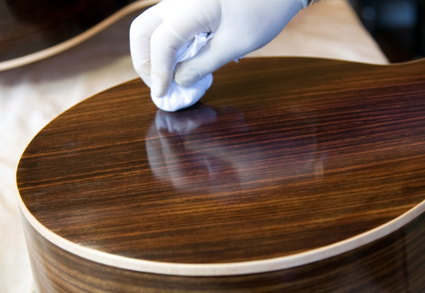
French Polish (fr??n? p??l?
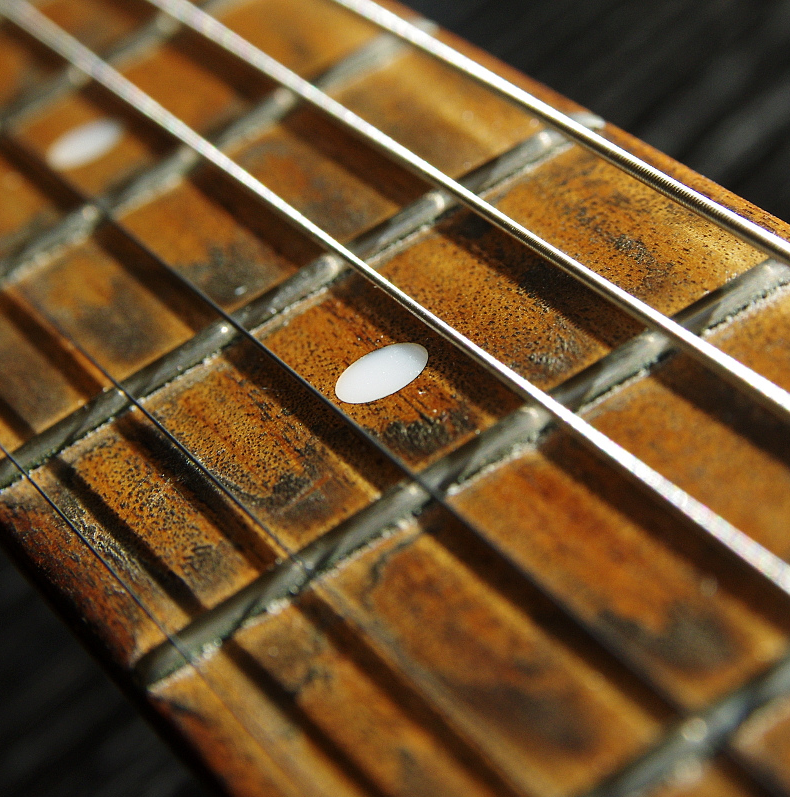
The Fretboard (fr??tb??rd), also known as a fingerboard, is the part of the guitar used to change the tones made by plucked or strummed strings. Located on the front of a guitar’s neck, fretboards are generally made of rosewood but can be made from a variety of other woods.
As the length (and thickness) of the string is what determines its tone, pressing a vibrating string against the frets laid into the fretboard changes the effective length of the string being played. This is how the tone of a string is changed.
A fretboard is common to almost all stringed instruments, not all of which are fretted. Most guitars, both electric and acoustic, have at least twenty two frets on their fretboard. Only twelve frets are actually needed at a minimum, because that is the number needed to produce one full octave per string.

A Fretless Guitar (fr??t l??s g?t??r) is a guitar that has no frets, making the fretboard a flat smooth surface. Fretless guitars generate a different sound than their fretted counterparts, since the guitar players’ fingertips absorb a lot more of the string
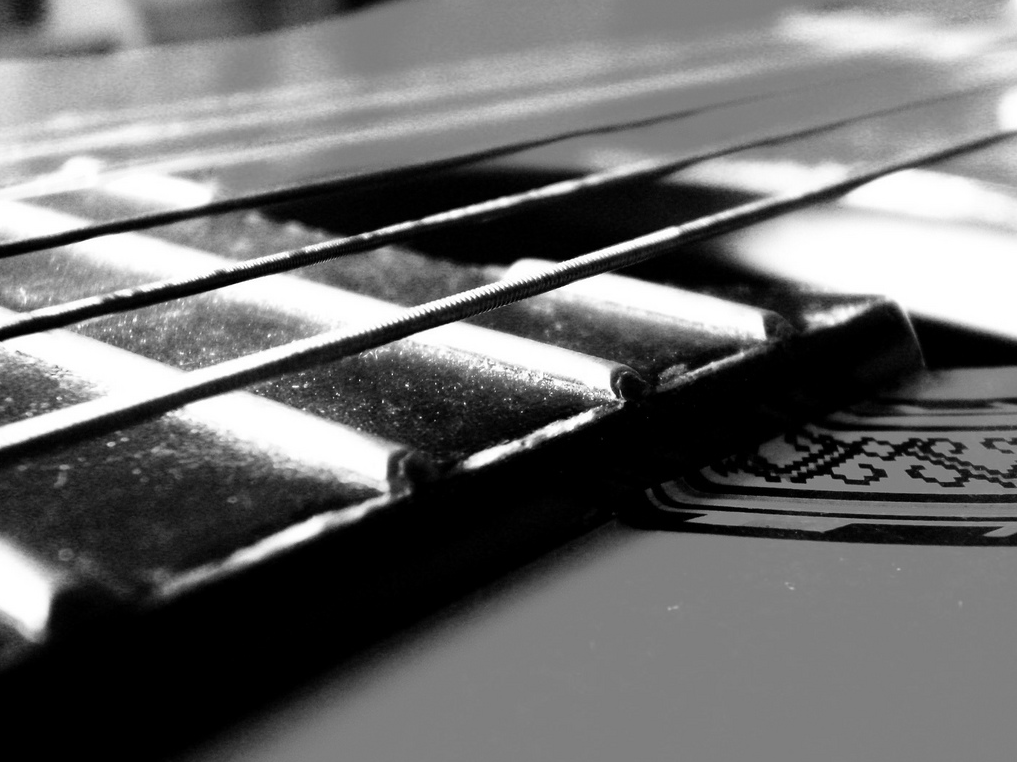
The Frets are the thin metal bars laid on top of the fretboard. Most guitars have between 18 and 24 frets. A guitar player “frets a note” when he/she presses a string against a fret while the string is vibrating. The shorter the vibrating length of a string being played, the higher the pitch made from that string.
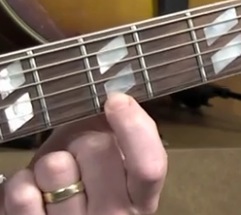
Fretting Notes is when you press one of your fingertips onto a string so it gently presses slightly to the left of one of your frets. When you pluck a string, it will vibrate from the saddle up to the where you have fretted your note. Fretting a note shortens the vibrating length of the string which you pluck, which raises that strings pitch.
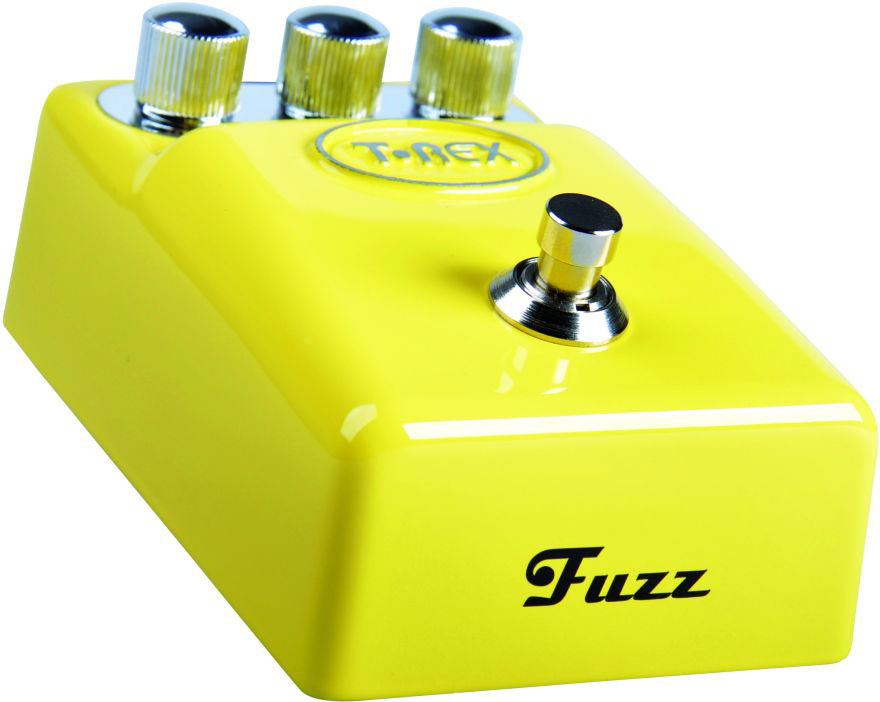
Fuzz (f??z) is one of the oldest and most iconic distortion devices available for the electric guitar. Creating fuzz tones involves boosting the amplitude of the sound waves from a guitar to the point that they are read as square waves on an oscilloscope. Soundwise, fuzz creates a buzzy, singing sustained sound with lots of overtones that still responds to a player’s picking dynamics.
Fuzz is a very common effect used in classic rock, but is still popular with contemporary players. In the past, fuzz was produced by slitting the speaker cones with a razor. However, fuzz tones are now available from a very wide menu of pedal, or stompbox choices.

Gain (g

Goth Rock (gÁΘ rÁk) is a genre of music that began to emerge in the late 1970s during the post punk years. While sharing some stylistic similarities to punk, gothic rock differentiates itself most notably through its dark, introspective, and personal lyrics, as opposed to punk’s more aggressive and confrontational tone. It often features keyboard […]
Watch short & sweet videos (5-10 minutes) that will actually teach you something useful.
Learn from masters level musicians with a minimum of 15 years full-time teaching experience.
Get anytime access to guitar instruction your computer, tablet & mobile device!
Master basic guitar fundamentals, chords, scales & your favorite styles of music or song.
We do everything we can to make our members Happy! That includes our 30 day, no-questions-asked, money-back guarantee.
Be heard. We love questions & lesson requests. New articles & videos publish constantly.


