The Body
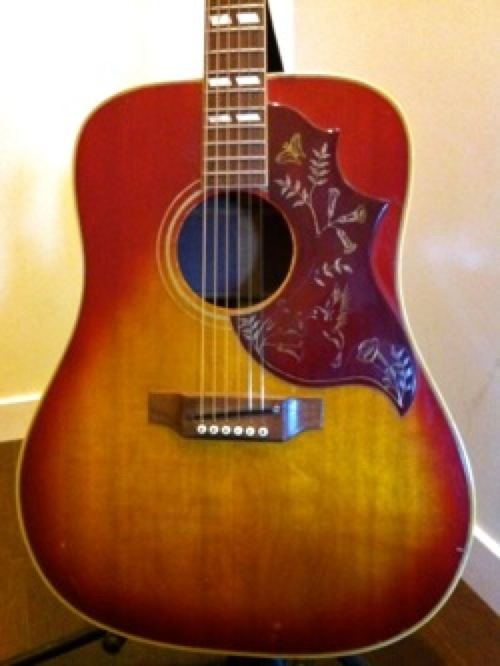
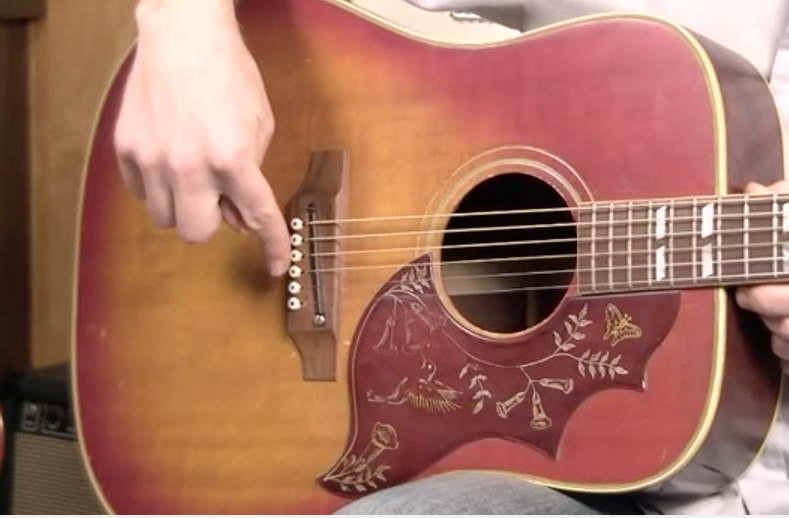
 The body is the largest part of the guitar. Assuming you are right-handed, the strings attached to the body of the guitar are strummed or plucked by your right hand to produce sound.
The Bridge
 The bridge is the piece of wood where the strings are fastened to the body of the guitar.
The Saddle
 The saddle is the piece of bone or plastic laid into the bridge of the guitar. It stops the vibration of the string on one end when plucked or strummed.
The Neck
 The long skinny piece of wood that extends out from the body is called the neck. It is the area of the instrument played by your left hand (assuming you are right-handed).
The Fretboard
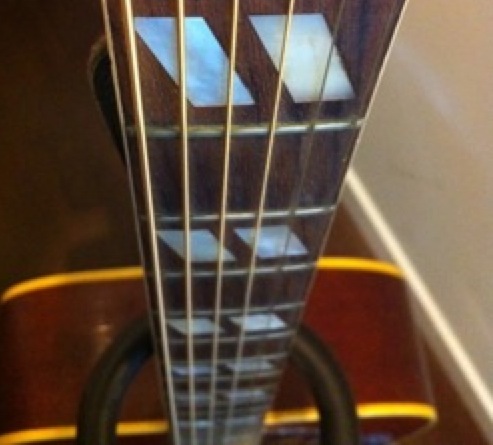
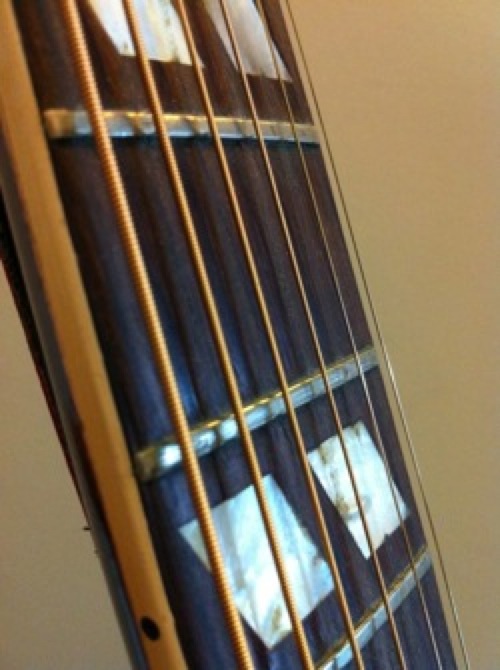
 The fretboard is the thin, flat slab of laminated wood on top of the neck. It is generally made of a hardwood such as rosewood or maple. It is also sometimes referred to as the fingerboard.
The Frets
 The thin metal bars laid into the fretboard, the frets are used to shorten the vibrating length of a string being played. Most guitars have between 18 and 24 frets.
The Head (or Headstock)
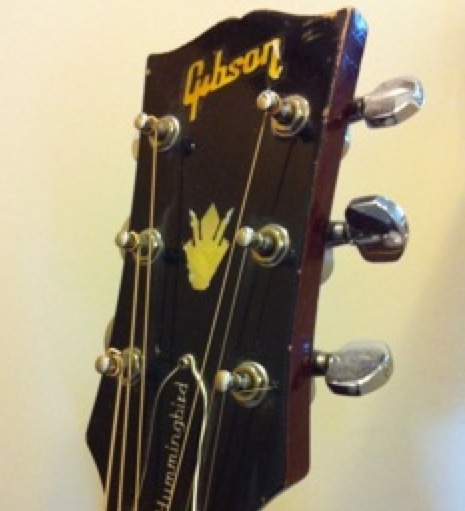
 The head or headstock is at the end of the neck of the guitar. It is the part of the guitar where the strings are attached, other than the bridge (on the body of the guitar.)
The Nut
 The nut is the small skinny strip of bone, plastic or metal, where the neck ends and the headstock begins. The nut has slots that hold the strings into place, and stops the vibration of a plucked string on one end. The saddle provides the same function on the other end of the instrument.
Tuning Post

Tuning posts are the six posts that are used to attach the strings to the headstock. The tuning posts are usually made of metal and can either be lined up with all six posts on one side or with three posts on each side of the headstock.
Tuning Pegs

Tuning pegs are the part of the tuning post that, when rotated, tighten or loosen the tension of the string. Tightening or loosening a string’s tension will change the pitch of the string.
(Visited 116 time, 1 visit today)
Video Transcript
Now that we’ve reviewed the major parts of the anatomy of the Guitar, let’s just do a quick review, because these are really important terms that we are going to be referring to, and they are common to all guitars.
Just to summarize quickly, the Body of the instrument is this whole part [Points to the biggest part of the guitar]. You have got the Neck, which is this part. [Points to the long section of the guitar]. At the end we’ve got the head with the Headstock. More specifically on the body of the guitar, you’ve got your Bridge here, which is what the strings are attached to. You’ve got the Pickguard. You have the sound hole on this Acoustic Guitar.
On the neck of the instrument, you’ve got these metal bars, running up and down the neck, these are called Frets. They are laid into the Fretboard. You’ve got the Nut here. [Points to the little piece between the neck and the head].
On the headstock, you have the Tuning Posts, which are what the strings are tied to. And then, you’ve got the Tuning Machine, which is what changes the pitch of the string.
Now, the strings themselves... Let’s do a quick review here. The number 6 string is this big one, that is closest to the ceiling. The number 1 is the one that is closest to the floor. So, they are numbered, 6, 5, 4, 3, 2, 1. And the names of the strings, they use those alphabet letters: E, A, D, G, B, E. From 6 to 1. Or you can use that little Elephants And Dogs Got Big Ears thing, if you need to remember what the names of the string are.
Now, if you are fuzzy on any of these terms, we recommend that you go back through some of the anatomy videos, and take another look, because these are essential terms to know about playing and knowing your guitar.
FAQ
What is the thing holding the strings above the bridge?
That piece is called the saddle. Similar to the the nut, where the strings press into the headstock, the saddle is the point where vibration is created when a plucked string is stopped on the bridge. Usually white or black, the saddle is normally made of bone or plastic or even some newer synthetic materials.
Are there other terms I need to know to buy a guitar?
Yes, there are some other terms that you may want to know before buying a guitar. We will cover these in the lessons that discuss the differences between the various types of guitars. Also, a good salesperson should be able to answer any question you may have. If you're in a rush you should know enough to not get taken advantage of, but we recommend that you that don't spend a ton on your first guitar (i.e: $100 - $300).
What do you think about guying a guitar over the internet?
Most guitars that are priced from $100 – 300 and are more or less similar in quality. You can safely buy a new guitar in that price range and know that you’ll be getting a decent instrument for a beginner. You may be able to get a better price by purchasing your guitar online. That said, if you do buy over the Internet, you should take the guitar to a local shop to have the luthier do a “set up.” Having your guitar setup will make it easier to play. Inexpensive guitars are usually made in a way where a setup can make a huge difference.