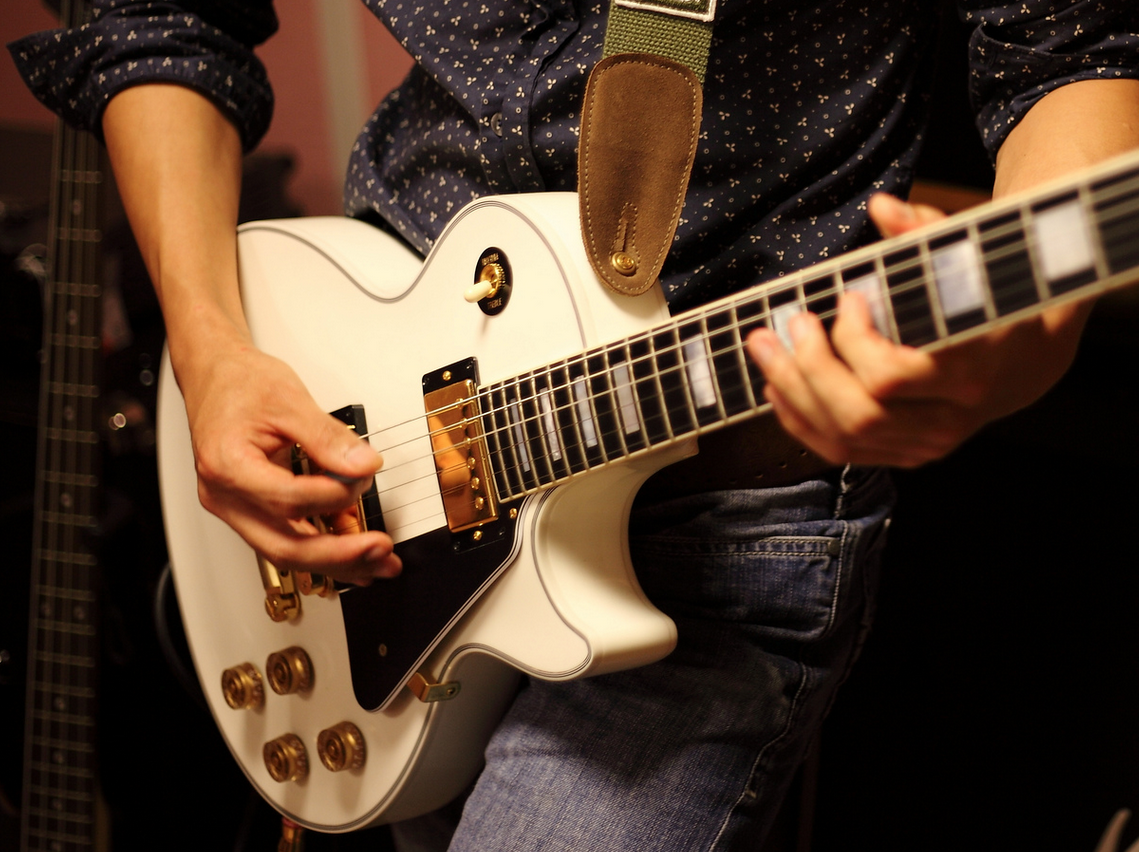
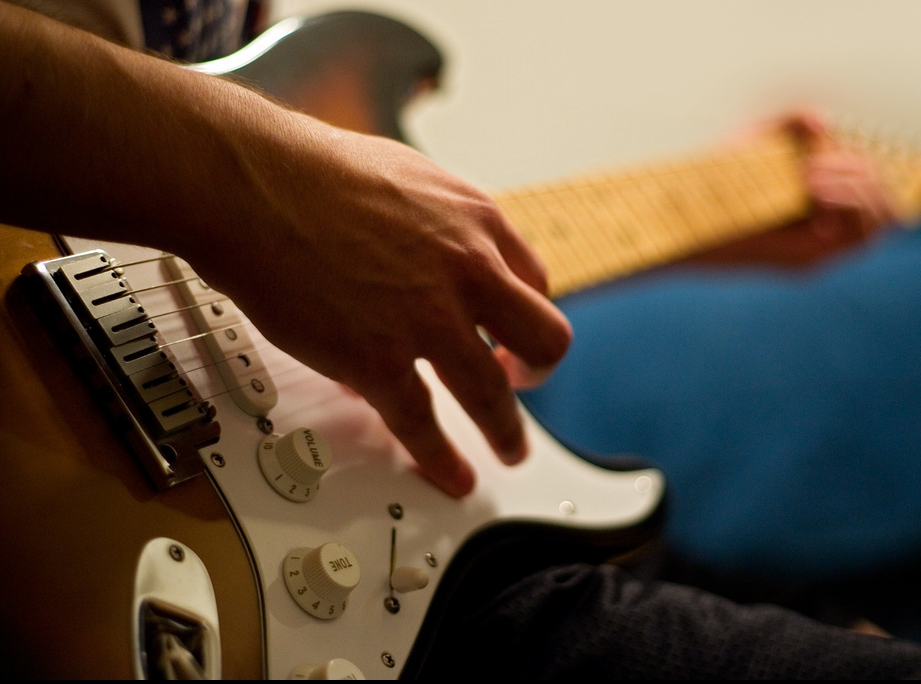
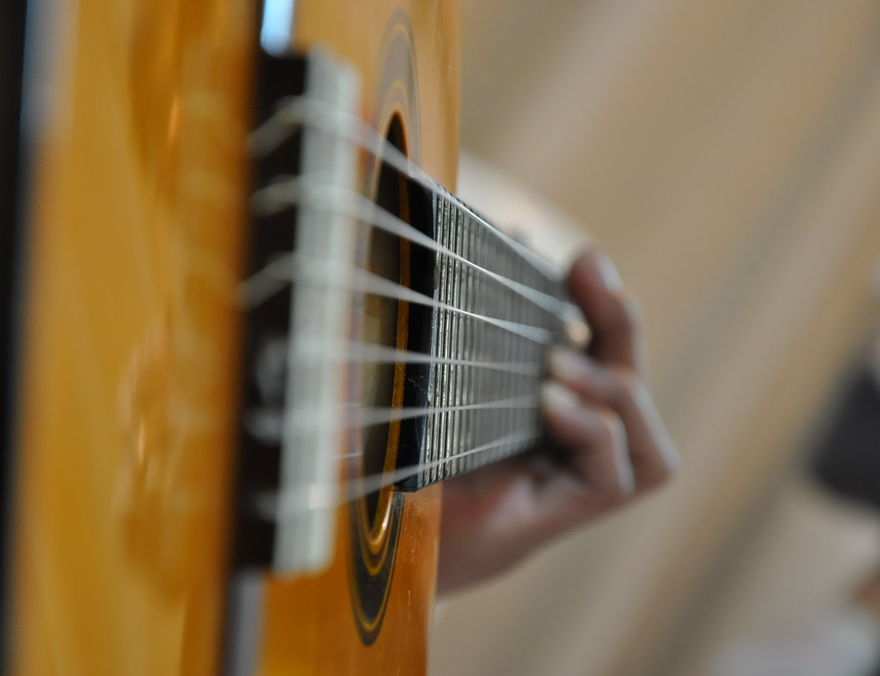
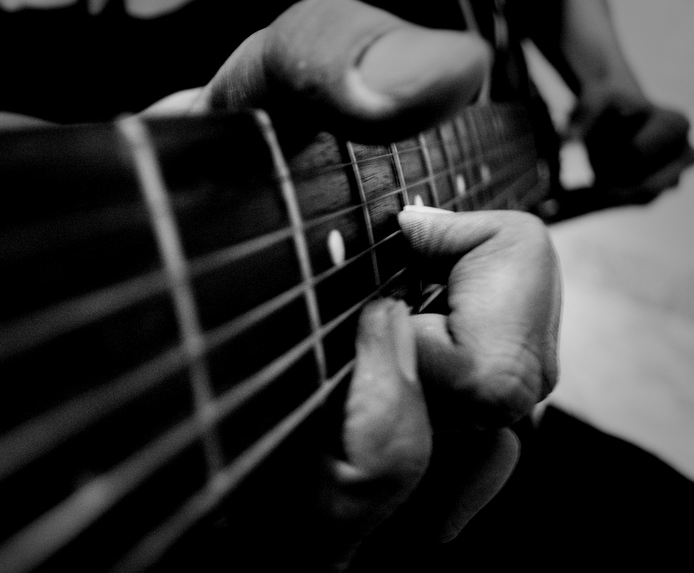
We've talked about right hand technique, we talked about left hand technique. Now we are going to actually apply both hands to the instrument, and start playing some notes. To start out doing that, we got to talk about
Fretting Notes. As you remember from the anatomy, the
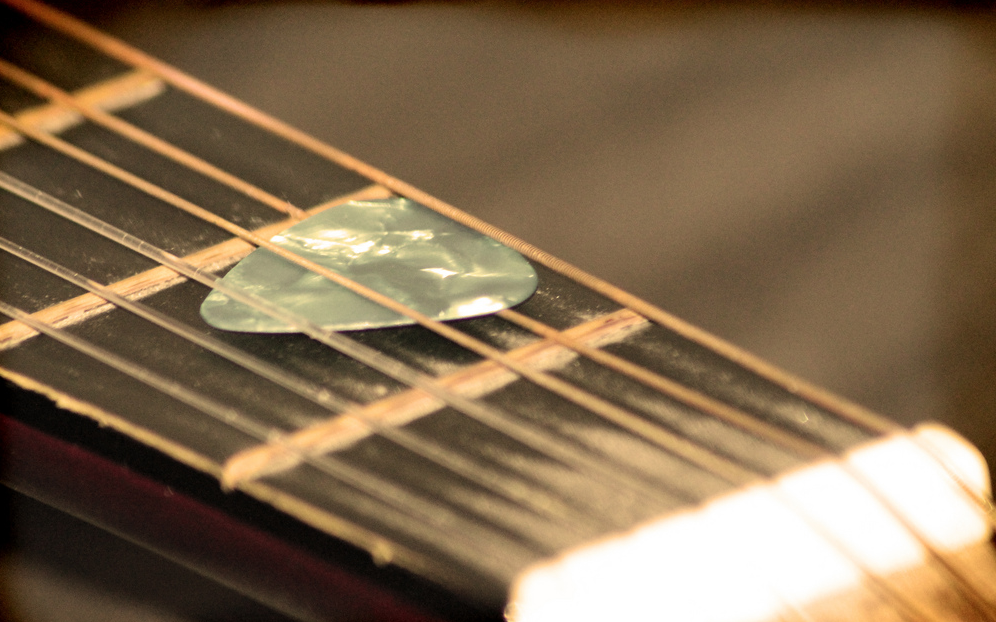
Frets are metal bars running up and down. Any time you take a string and you press it against the fret, you're fretting a note. I am going to take my number 1 finger, and I am going to go to number 1 string, the E string. And I am going to count up to the 3
rd fret... So, 1
st fret, 2
nd fret, 3
rdfret. And I am going to fret this note.
Here is how we do it. Start out by pushing the string directly on to the fret, and then slide back slightly, until you are right behind the fret. That is where you want to be ideally. You don't want to be in the middle of the fret, and you certainly don't want to be as far from it as you can. You want to be as close as you want. Or as you can. I am going to take that string, and I am going to push it until it touches the fret. Securely. But that's about it. If you go beyond that, like if you're pressing the string onto the wood, that's kind of going a little bit too far. You don't need to press that hard, you're just going to tire your fingers out. And if you don't press hard enough, the notes not going to sound right.
So, let's listen to what this fretted note sounds like. 3
rd fret, I push down [Plucks the 1
st string at 3
rd Fret]. Rings kind of fine. This is what it sounds if it's not fretted hard enough [Plucks the string few times]. Or maybe [Plucks the string few times], no sound at all. So, you have to press a little bit tighter, and remember think about sort of hanging by the cliff, that is where you're going to have a lot of energy in your finger, by really flexing that tip joint on the fretting finger. Of course, if you look down, and your finger is kind of white from pressing as hard as you possibly can, you might be pressing a little bit too much. Lighten up the touch a little there.
Initially your fingers will want to kind of fly away, or they might want to tuck under the
Fretboard, or something like that. Those are habits that you want to avoid. You want to try to keep them close to the strings, in the playing position. Fingers curved, hovering over the strings. Again, these are all things that you will practice, and develop. They're going to be difficult at first, but, you'll get the hang of it.
In the previous lesson, we ended with this exercise, where you were touching the strings, and kind of bouncing on them, like trampoline. And then, moving on to the next. What we are actually going to do here now, is involve the right hand, and play those notes. And that is the exercise some people would call the
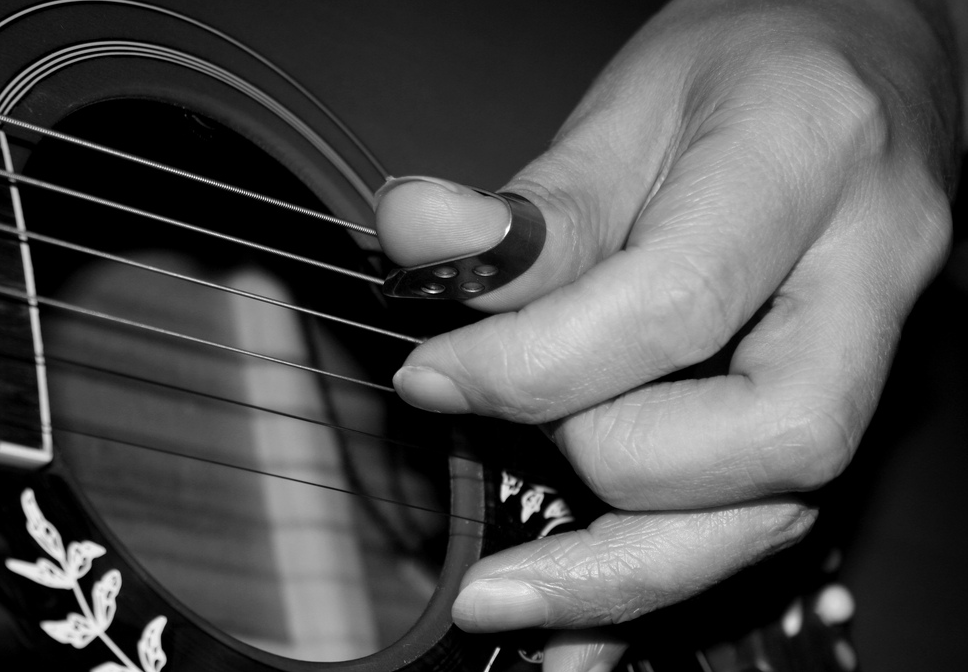
Spider Exercise. Just to review quickly… If you're playing with the pick, you just want to pluck the string with down strokes. [Plucks the string with the pick]. Little arcs. If you are playing
Fingerstyle, just use your index finger for now, just one finger, and try the
Rest Stroke [Plucks the string with the index finger], where you're going to come to rest on the string above it.
Here is the Spider Exercise: Each finger plays a different fret, one after other. You can do it anywhere on the
Guitar. It is little bit harder down here at the 1
st fret, because the
Frets are so far apart, and some guitars are really high action up towards the 12
th fret, so could be high up there. Could be tricky. Let's start around the 5
th fret, maybe the 3
rd fret. I am going to do the 3
rd fret. My 1
st finger is going to be on the 1
st string, 3
rd fret. I will fret that note [Plucks once], and pluck the string. The next finger plays the next fret. And again, I am going to try to get right behind the fret [Plucks once]. Here we go. Then the next finger [Plucks once]. And finally the pinkie. [Plucks once]. You want to shoot for clarity of sound, and that nice, relaxed touch, if you can. Don't worry about going fast or anything like that. [Plucks same string, different
Frets]. At first your notes might come out sounding a little broken, kind of like [Demonstrates broken sound of the notes]. That is ok for now.
Developing that smooth sound is all about coordinating the hands, so that the second a new finger comes down, the right hand plucks it, and that is the skill that just takes time to develop. The way the exercise works is you want to do that on each string. [Plucks string by string, fret by fret]. I am going fast just to demonstrate, but you should probably think about this speed to start out with. [Plucks them in the slower manner]. No faster. [Plucks them in the slower manner].
In the beginning, you should probably just go one finger after the next, letting the other fingers hover above the strings. Also in the beginning, when you start to get to these thicker strings, the pinkie is going to be really difficult. So you might have to start leaving that out. You can almost hurt yourself, you have to be careful here. If you get to these thick strings, and you feel like you are pressing as hard as you can, that is probably not worth, and you can add that in later. For example, maybe on the thick strings, you might get your 1
st note. You may get the next note, and with your 3
rd note you've got trouble. Maybe the 4
th one is not going to happen. It's all right. Leave it out for now. So when I get to the 6
th string, I am going to start coming back the opposite direction, [Plucks back in the opposite direction]. So on and so forth. Again, not about the speed. I am just demonstrating. Go nice and slow, and for good tone try to keep the fingers under control.
One last detail that you can think about is, in the beginning you're going to go one finger, then the next. Once you get used to it, what you can do is, try adding the fingers on, and keeping the old ones in place. When you get to the pinkie, that is when you need to move in the index finger onto the next string to prepare it, and then repeat. I would be going finger 1, 2, 3, 4… 1, 2, 3, 4. That is the spider exercise. It is the time tested exercise to coordinate both your right and left hand for playing with one another, and to develop strength in your left hand, and just familiarity with plucking strings. So, enjoy, but take your time practicing this one.



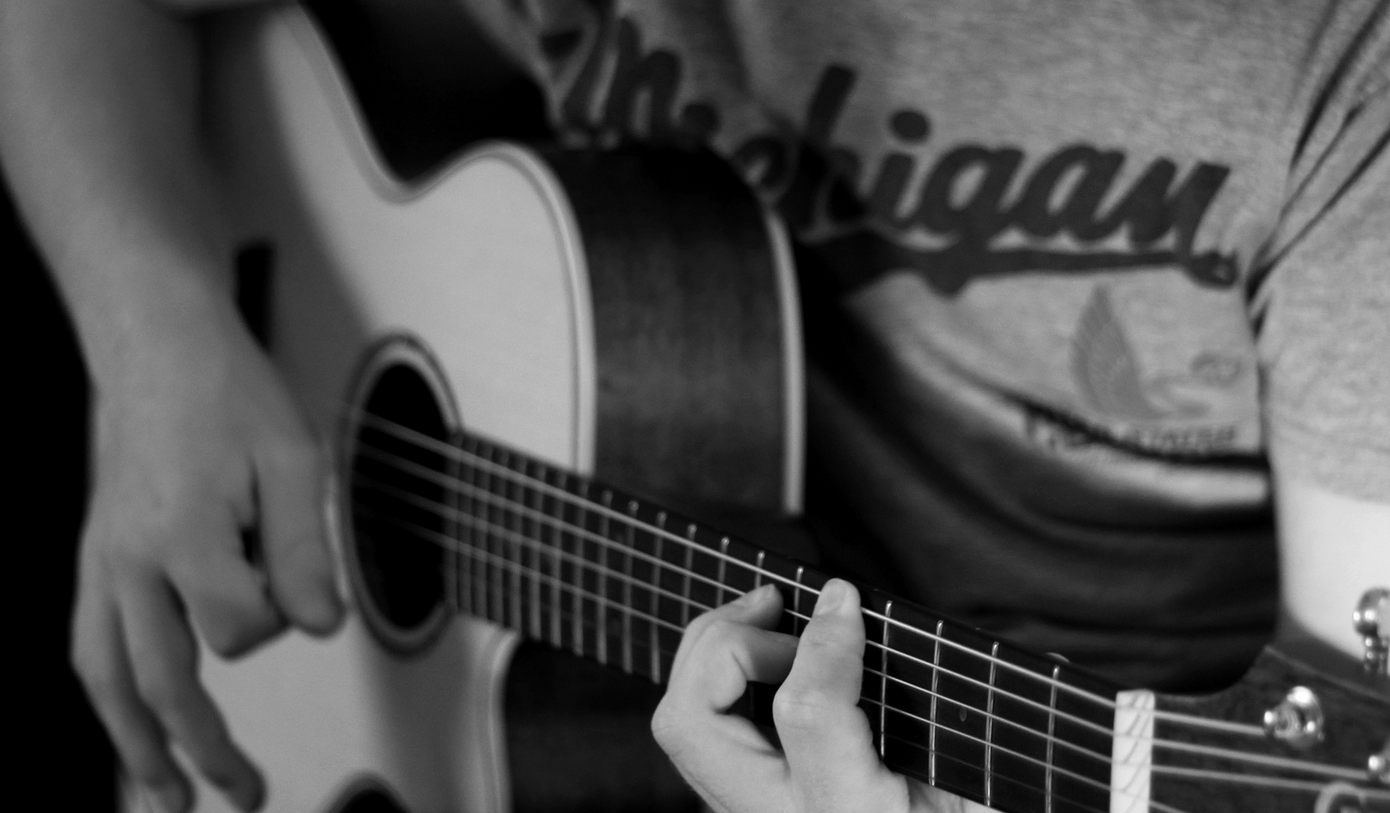
 Place your left hand in the proper position on the neck.