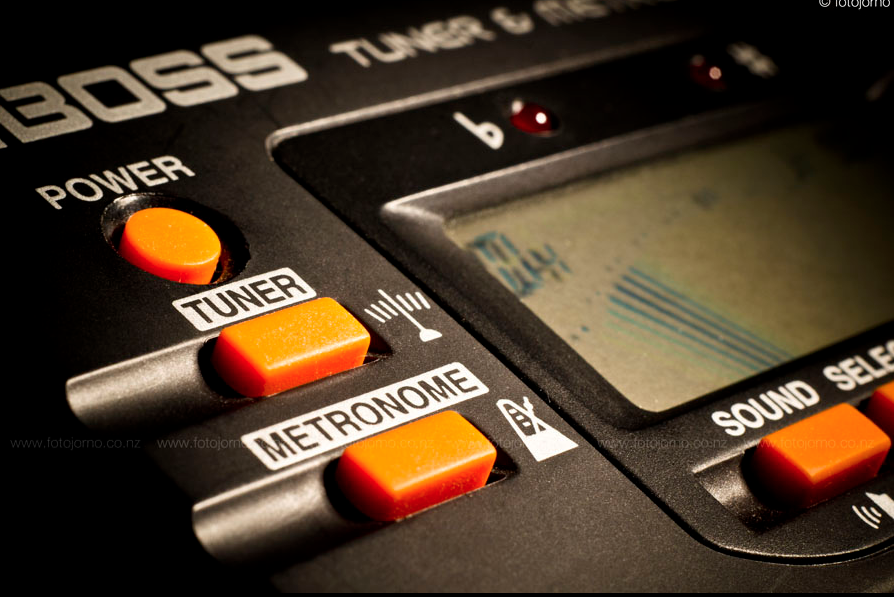
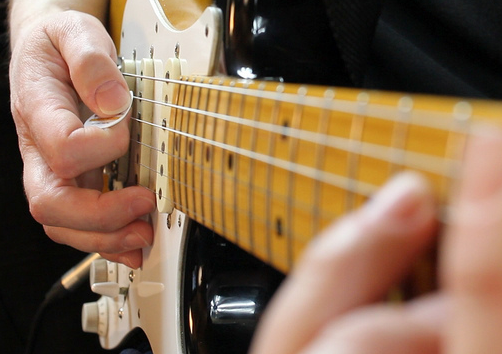
Welcome back. In our last lesson we were dealing with some strumming techniques, and we were also using the metronome to practice those techniques. In this lesson we want to teach you some new exercises that you can use with the metronome, and these are really designed to strengthen your internal rhythmic clock. The basic idea is you want to be super solid on where beat one is, and you want to be able to accent one or any other beat.
Now in order to do this, one thing we need to make sure we’re doing is counting out loud, otherwise every click sounds like the next click. So the only way to differentiate them is to be counting. So we’re going to start out with a very simple exercise, it’s more or less what we’ve previously done to describe whole notes. What I’m going to do here is just play on the one. That’s it; it’s going to ring for the rest of the beats and then every one I’m going to strum. So here we go, two, three, four. One, two, three, four. One, two, three, four. One, two. So you get the idea. Nothing new there.
Now first variation, let’s play one and. Like eighth notes, you’re going to go down-strum, up-strum, and nothing will get hit on beat two, three or four. So that’s how this is going to sound. And again, I’m going to be using my G chord like I did in the previous exercise. Now our metronome, by the way, is on 60, if you want to practice along or practice these exercises afterwards. So here we go, two, three, four. One and two and three and four. And one and two and three and four. And one and two and three and four. And good.
Now what we’re going to do here is put the up-strum before the one. So it’s going to go and one, two, three and four and one. When you play a note or a chord or really anything before the actual start of a song that’s called a pick up note. It happens all the time in music. If you think about the song ‘When the Saints Go Marching In,’ turns out that ‘Oh when the’ those are all pick up notes. The song actually starts on the word saints. ‘Oh when the saints, go marching in.’ that’s the basic idea, so we’re going to go and one, and one. So here’s how that’s going to sound, two and three and four. And one and two and three and four. And one and two and three and four. And one and two.
So these exercises are not terribly tricky but now what we’re going to do is let the metronome click away, and I’m going to do one and, one and, and then and one, and one. So two of each. And this is a lot trickier because you have to be really solid on where the one is, so that you’re sort of able to do the variation comfortably. So here we go. Two and three and four. And one and two and three and four. And one and two and three and four. And one and two and three and four. And one and two and three and four. And one and two. And you would go on and continue to practice it like that.
So again, this exercise looks really simple, maybe a little bit boring, but it’s actually really good for sort of strengthening this idea of where the one is. Now one of the reasons we have to do that is because one is really the anchor point that you need to know where it is at all times, but a lot of the times you’re not actually playing on one, or you are but you’re actually accenting other beats more strongly.
So let’s take these exercises and apply them to beat two. So basically I’m going to start out just playing beat two and remember to count out loud here, otherwise it kind of doesn’t make a difference. One, two, three, four. One, two, three, four. One, two, three, four. One, two, three.
So now we’re going to do the two and two and exercise. Eighth notes, remember, downstroke, upstroke. Here we go, three and four. And one and two and three and four. And one and two and three and four. And one and two and three.
And now the exercise where we’re going to go and two. Two and three and four. And one and two and three and four. And one and two and three and four. And one and two.
And now finally we’re going to do two and two. Two and two and, and then and two and two. Two and three and four. And one and two and three and four. And one and two and three and four. And one and two and three and four. And one and two and three and four and.
A little detail here, it’s very important that when you play any beat, for now at least, that that gets the down-strum. Super easy to start kind of you know, I don’t know, I’ll do an up-strum on the beat and then down to reverse it and all, that kind of makes a mess of everything. You want to be really careful that you’re going down on the down beats and up on the up beats. And again, it’s less of a physical thing then it is something to solidify your rhythmic clock inside. Your sense of where the beats are.
So you can do these exercises on any beat. I can do beat three, beat four. Let’s try this final variation, and this one you might want to slow your metronome down for. But what we’re going to do is practice playing on beat two and beat four. Again it could be beat one and three, one and four, whatever. But two and four has special importance here because that’s something in music, that’s another term here called the backbeat. On the drum kit this is where the snare drum, which is like a loud cracking sound tends to play. So even though beat one is our anchor point, beat two and four often get a little accent.
So we’ll just do for example, only beat two and only beat four to start. One, two, three, four. One, two, three, four. One, two, three, four. And then you could do the various exercises where you are using the eighth notes. For example, I’m going to go two and four and. Down beat, up beat, down beat, up beat. Here we go, three and four. And one and two and three and four. And one and two and three and four. And one.
So of course you could do and two and four, you could do the two and four and two and four and, and two and four. So all of these little variations are excellent for developing your sense of where these beats are and always remember that one is basically how you anchor yourself. And a lot of times when musicians get kind of hung up trying to learn a phrase, maybe two musicians are talking, somebody might say, where’s the one. I need to know where the one is. So that’s really what we use as musicians to figure out really complicated patterns if you need to do that.
So have fun with these exercises and remember with the metronome it’s really important, it can be challenging so sort of use it as much as you can and have fun with it.